OLS Solicitors Blog
Power of Attorney Fraud Is Rising: What Families Need to Know
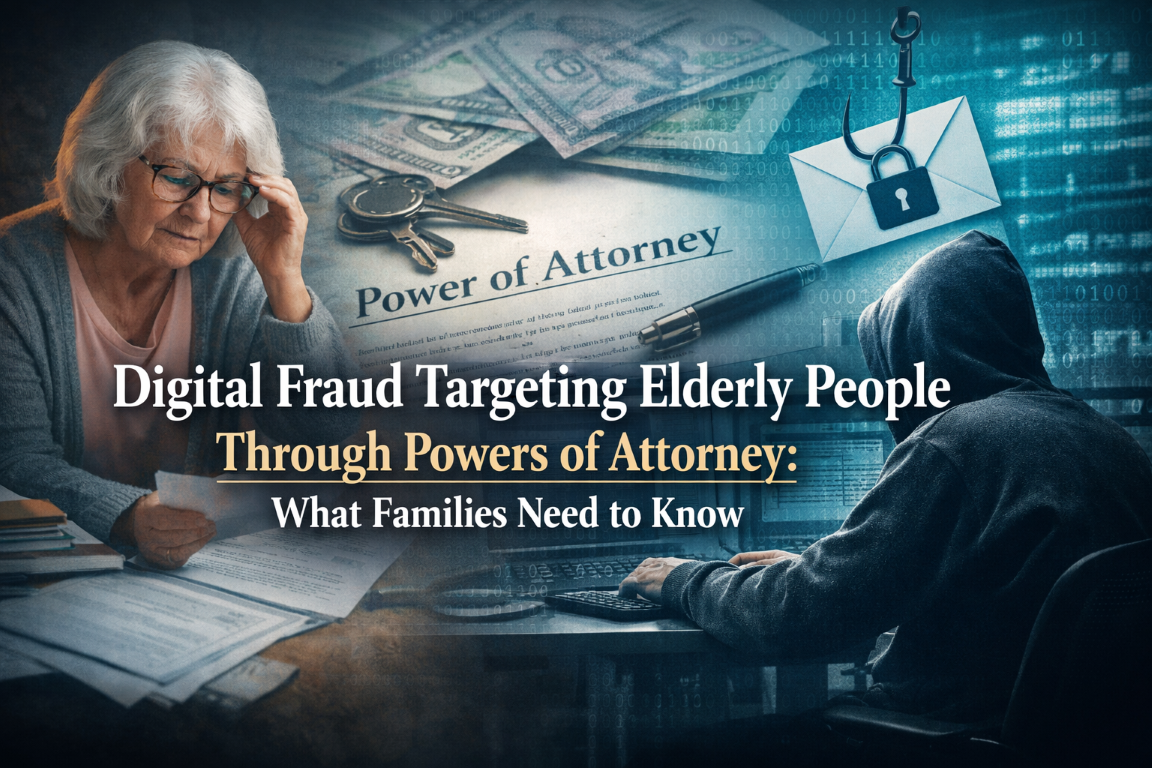
The Growing Risk of Power of Attorney Fraud Against Elderly People
Digital fraud targeting elderly and vulnerable people is increasing at an alarming rate. We are seeing a sharp rise in cases where criminals exploit powers of attorney to gain control of someone’s finances, often without immediate detection. Recent figures suggest this type of fraud has increased by as much as 300%, raising serious concerns for families across England and Wales.
Key Takeaways
- Fraud involving powers of attorney has risen significantly, with elderly people most at risk.
- Criminals may use phishing emails, fake websites, and social engineering to obtain personal information.
- Abuse can go undetected for long periods due to small, gradual financial withdrawals.
- An ageing population and increased digital processes may be contributing to the rise in fraud.
- Early planning and oversight may help reduce the risk of financial abuse.
The Rise of Power of Attorney Fraud
We are increasingly supporting families affected by fraudulent or abused powers of attorney. Cybercriminals may manipulate the legal process by forging documents or misusing legitimately registered powers of attorney, allowing them to make financial decisions on behalf of an elderly person.
These schemes are often sophisticated and designed to exploit individuals who may not be confident using digital technology. Once control is gained, fraudsters may withdraw funds, sell property, or otherwise benefit financially at the expense of the vulnerable person.
How Criminals Carry Out This Type of Fraud
In many cases, criminals begin by gathering personal information. This may involve:
- Phishing emails designed to look like legitimate communications
- Fake websites that collect sensitive personal data
- Social engineering tactics, such as posing as professionals or trusted contacts
This information may then be used to create fraudulent power of attorney applications or to interfere with an existing arrangement. Because the misuse often involves small, regular transactions, it may not be noticed straight away.
Why Elderly People Are Particularly Vulnerable
This type of fraud appears to be increasing alongside rising dementia rates and an ageing population. More people now rely on others to help manage their affairs, which can create opportunities for abuse if safeguards are not in place.
The shift towards digital legal services, accelerated during the pandemic, has also reduced face-to-face verification in some situations. While digital processes can be more convenient, they may also present additional risks if not carefully monitored.
What the Figures Tell Us
Data from the Office of the Public Guardian (OPG) highlights the growing scale of the problem. According to its most recent annual report, investigation cases increased from 2,849 to 3,647 in a single year, representing a 28% rise. The OPG also supervised over 60,000 deputyship cases, reflecting increasing demand for oversight and protection.
These figures are referenced for general information only and should be reviewed by a solicitor for accuracy and context.
Steps Families Can Take to Reduce the Risk
While no system can eliminate fraud entirely, there are practical steps families may consider:
- Regularly reviewing bank statements and financial activity
- Maintaining open conversations with elderly relatives about money and decision-making
- Being alert to sudden or unexplained changes in financial circumstances
- Setting up a legitimate lasting power of attorney early, with appropriate advice
Having a properly prepared and registered lasting power of attorney may offer a level of protection and clarity, particularly if it is put in place before capacity becomes an issue.
When to Contact the Office of the Public Guardian
If there are concerns that an attorney or deputy may be abusing their position, the Office of the Public Guardian has authority to investigate where a registered power of attorney or court order exists. The OPG typically risk-assesses the majority of concerns within two working days, which can provide important safeguards.
The Need for Stronger Safeguards
As technology evolves, so do the methods used by fraudsters. We believe there is a continuing need for stronger digital security and verification processes that balance accessibility with protection. Addressing this issue may require cooperation between legal professionals, technology providers, and public bodies.
Education and Awareness Are Key
Fraud often thrives where there is a lack of awareness. By talking openly about the risks and educating families and vulnerable individuals, it may be possible to reduce the number of successful attempts and limit the harm caused.
Frequently Asked Questions
What is a power of attorney?
A power of attorney is a legal document that allows one person to make decisions on behalf of another. In England and Wales, this is commonly a lasting power of attorney, covering financial matters, health and welfare, or both.
Can a power of attorney be abused?
Yes. While most attorneys act properly, abuse can occur. This may include misuse of funds or making decisions that are not in the donor’s best interests.
What should I do if I suspect fraud?
You may wish to seek legal advice and contact the Office of the Public Guardian if a registered power of attorney is involved. In some situations, it may also be appropriate to contact the police or a financial institution.
How We Can Help
If you are concerned about potential financial abuse, misuse of a power of attorney, or want advice on putting the right protections in place, we can help. Our team regularly advises families on safeguarding vulnerable relatives and responding to suspected abuse.
Contact us today to discuss your concerns confidentially and find out how we may be able to support you.
Legal Disclaimer: This article is for general information only and does not constitute legal advice. The law relating to powers of attorney and fraud in England and Wales can be complex and fact-specific. You should seek advice from a qualified solicitor about your individual circumstances. References to legislation or public body data should be independently verified.